The Inspiring Journey to Becoming Maharashtra’s ‘Jackfruit King’


When people think of the Konkan region, the first things that come to mind are the famous Alphonso mango and cashew. But today, a new agricultural revolution is emerging from Konkan, and its name is commercial jackfruit farming.

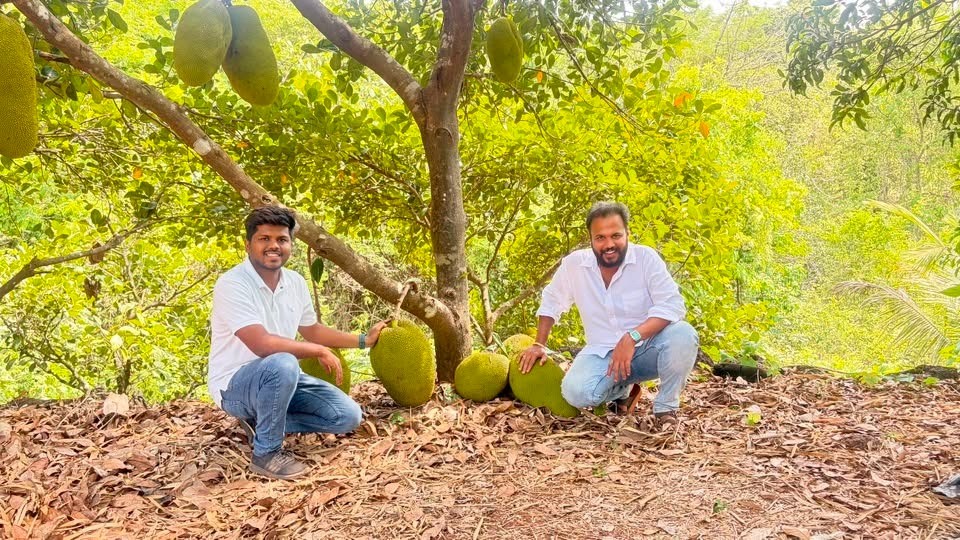
There was a time when jackfruit was considered nothing more than a tree growing in home gardens or along farm boundaries. Hardly anyone imagined establishing a dedicated jackfruit orchard. Challenging this conventional mindset, Harishchandra Desai from Lanja taluka in Ratnagiri district saw jackfruit from an entirely different perspective.

He imported 400 saplings representing 36 different jackfruit varieties from Kerala and established a commercial plantation. At that time, many people questioned his decision and even ridiculed him. Today, however, his pioneering effort has inspired thousands of farmers to adopt commercial jackfruit cultivation.

Milind Patil — One Man, One Mission


Some people make you believe that the world is still a beautiful place simply because they exist.Milind Patil is one such person.

Born and raised in the coastal region of Kudal, Sindhudurg in Konkan, he has dedicated his life to a mission that most of us have never even considered — conserving the rare and endangered tree species of the Western Ghats.

Not just conserving them, but bringing them back to life.

From collecting a single seed in the depths of a rainforest, nurturing it for years, and eventually returning the sapling to its natural habitat, his work is a testament to patience, dedication, and love for nature.

What may seem simple on the surface is actually the result of countless hours, years of commitment, and an unwavering passion for the forests of the Western Ghats.

The Western Ghats — Our Priceless Natural Heritage

The Western Ghats are much more than a mountain range. They are much more than forests.

They are the lungs of our nation.

Recognized as one of the world’s 35 Biodiversity Hotspots, the Western Ghats are home to thousands of species of plants, animals, birds, and insects found nowhere else on Earth.

Yet this priceless ecosystem faces increasing threats from roads, urbanization, deforestation, and habitat loss. Along with disappearing forests, countless species are vanishing—many before we even learn their names.

Sindhudurg district alone is home to nearly 425 tree species. Yet very few people are aware of this remarkable diversity.

Milind Patil, who completed his B.Sc. and M.Sc. in Forestry, spent years exploring forests as part of his education. During one such exploration, he realized that the forests he had known all his life were very different from the evergreen rainforests of the Sahyadri mountains.

That realization sparked a new journey.

He began venturing deeper into untouched evergreen forests—places without roads, vehicles, or settlements. Forests that remained wild and pristine.

There, he encountered trees, flowers, fruits, and leaves unlike anything he had seen before.

He photographed them, consulted experts, studied books, and connected with organizations such as the Nature Conservation Foundation. From Pune to Thiruvananthapuram, he interacted with botanists and researchers, gradually piecing together a clearer picture.

The wet evergreen rainforests of the Western Ghats—among the richest and most biodiverse ecosystems on Earth—were also among the most threatened.

Someone needed to step forward.

Milind Patil did.
A Young Farmer’s Direct-to-Customer Story


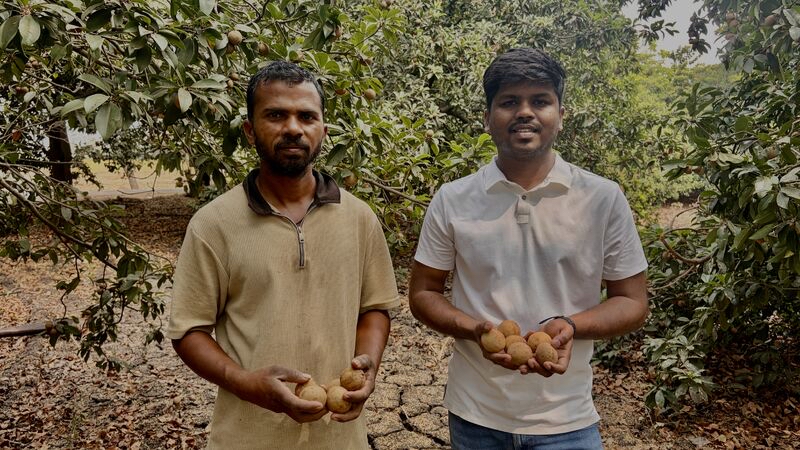
We often hear that farmers don’t get fair prices for their produce, or that they depend entirely on middlemen to sell their crops. But along the Sangli–Tasgaon Road, near Kavlapur, I witnessed a refreshing and hopeful story. A small vehicle parked by the roadside had drawn a surprising crowd. Curious, I stopped to see what was happening. There stood a young farmer, confidently selling sapota (chikoo) grown on his own farm. His name is Abhay Nalawade. During the harvest season, Abhay follows a disciplined daily routine. His day begins at 6 a.m., harvesting sapota from his orchard, and by 3 p.m. he is on the roadside, directly selling his produce to customers.

He owns 15 acres of ancestral farmland. Around 27 years ago, his father planted a sapota orchard on 2 acres, consisting of nearly 80 trees—some of which have spread well beyond half a guntha due to their strong root systems. Since 2019, Abhay made a bold decision: no traders, no middlemen. He sells 100% of his sapota directly to consumers. The fruit fetches ₹50 per kg or more, ensuring fair value for both farmer and customer. Along with sapota, Abhay has cultivated jowar (sorghum) on 6 acres, achieving an impressive yield of 20 quintals per acre—a remarkable benchmark. This year, he opted to grow wheat on 4 acres instead, and even before harvest, 50% of the produce was already booked by customers. What makes his journey truly inspiring is that he does not rely on hired labor. Every farming activity is personally supervised and executed by him. Sugarcane remains his main crop, from which he consistently gets excellent yields. Thousands of travellers passing along the Sangli–Tasgaon road have enjoyed the natural sweetness of his sapota.

On average, Abhay earns ₹3,500 to ₹4,000 per day during the season, purely from sapota sales. Each tree yields sapota worth nearly ₹5,000 annually. His farming practices are simple yet powerful. The orchard is irrigated solely through drip irrigation. To date, he has never purchased or applied any chemical or organic fertilizers. The result? Naturally sweet, authentic fruit that customers trust and return for. If you ever travel on this route, make it a point to stop and buy sapota from Abhay. By doing so, you directly support the farmer-to-consumer model—one that empowers farmers and delivers honest food to people. Visitors are welcome to see his sapota orchard, understand his farming practices, and purchase fresh produce directly from the source.


Ingawale Farm House


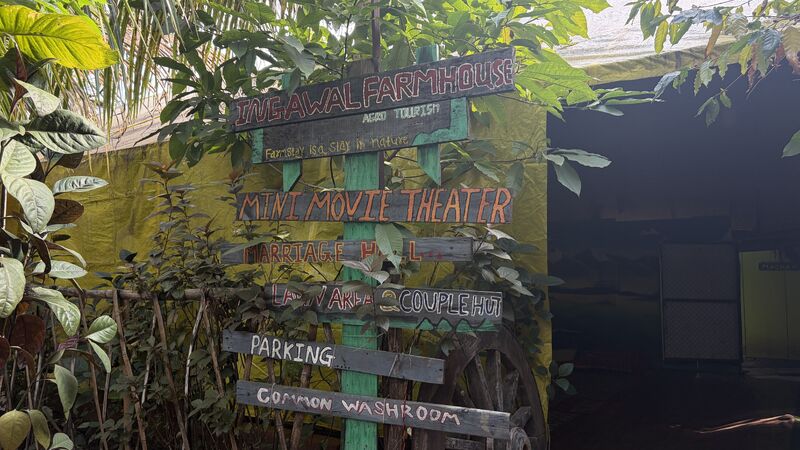
You may find it hard to believe, but it is absolutely true — tourists from 38 different countries have visited the Ingawale Farm House located in Kidgaon near Satara. Just 10 km from Satara, on the banks of the Venna River, this beautiful farm stay has become a major attraction for international travelers. Satara is surrounded by several tourist destinations, and realizing the potential, Akshay Ingawale, a young entrepreneur, decided to start this farm stay in 2017 so visiting tourists could have a homely, authentic stay option.

The Ingawale family owns four acres of farmland near the village, and this is where the farm stay began. Akshay, a B.Sc. dropout, always wanted to work in the tourism sector. He started the farm stay on a small scale, but after COVID, the flow of tourists increased significantly. Today, on half an acre of their farmland, Akshay runs several activities for visitors. The stay includes eight spacious rooms built for tourists. A specially built machan and watchtower in the farm provide breathtaking views of Yewateshwar and Ajinkyatara fort — a true delight for visitors. Akshay has minimised construction and focused on natural materials to maintain the rustic charm and reduce costs. The spacious hall built for tourists uses bamboo extensively and beautifully.

Akshay shares that during the lockdown, when tourists were restricted, over 200 local ceremonies and functions were held at the farm. Even today, on days when there is a function, they do not accept tourist bookings. A beautiful lawn and a small outdoor kitchen have been built where tourists can enjoy the experience of cooking on a traditional firewood stove. Several coconut trees have been planted to provide shade as well as additional income. The family’s house and farmland are adjacent to the farm stay. Akshay personally gives visitors a complete tour of his farm.

Foreign tourists enjoy listening to information about the crops, and many even join in the morning routine of milking the cows. He also offers local sightseeing packages — Kaas Plateau, Thoseghar Waterfall, Koyna Backwaters, Ajinkyatara Fort, Tapola, Meruling, etc. For this, he has even purchased a caravan, which allows him to arrange camping anywhere for tourists. Because of all these experiences, many guests keep returning. Akshay has listed Ingawale Farm Stay on all major travel websites, which has significantly boosted his reach and bookings. His wife and family members actively support him in running the place.

Earlier, the four acres of farmland produced around 40 tonnes of sugarcane annually. But today, the farm stay alone generates an average monthly income of around ₹1.25 lakh. Entrepreneurs like Akshay Ingawale inspire the rise of farmer entrepreneurs across villages — helping strengthen the rural economy.